
If you’re adding living space to your property, you’ve probably run into two popular options: the accessory dwelling unit (ADU) and the tiny house. They sound similar, and people often use the terms interchangeably. But they are quite different, and those differences matter a lot for your budget, your property value, and your long-term plans.
We’ll walk through what sets ADUs and tiny homes apart, comparing them on permanence, zoning, financing, customization, and long-term value. By the end, you will know which option fits your goals, and why so many homeowners choose an ADU built from a proven, professional plan.
What Is the Difference Between an ADU vs a Tiny Home?
Let’s start with the basics, since this is where most confusion begins.
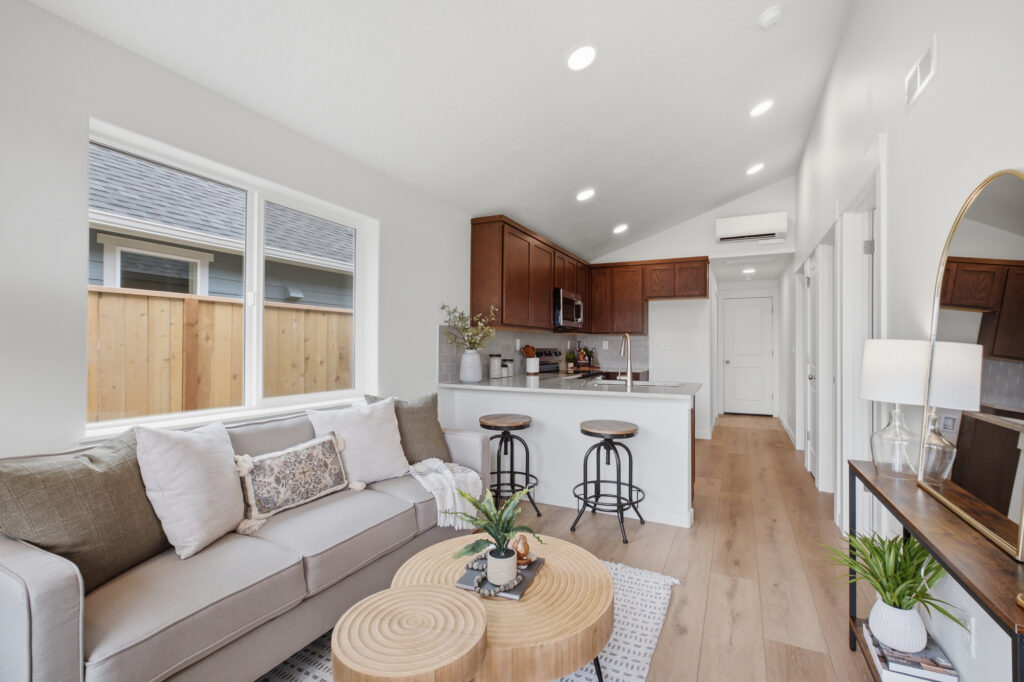
An ADU is a full, permanent living space built on the same lot as your main home. Think of a backyard cottage or a detached unit with its own entrance. It has everything a home needs: a kitchen, a bathroom, a place to sleep, and its own front door.
A tiny home is a small dwelling, usually under 400 square feet. Many sit on trailers, which makes them mobile. Others rest on a permanent foundation, but the wheeled version is the one most people picture.
Which One Is Actually Permanent?
This question matters more than most people realize. One of the biggest differences in an ADU vs tiny house comparison is permanence.
An ADU rests on a foundation and connects directly to your home’s water, sewer, and electrical systems. It is built to last for decades, just like your main house. Appraisers, lenders, and buyers all treat it as a real part of your property.
A tiny home on wheels can be towed away whenever you like. That mobility is appealing if you love the idea of relocating. But if you want a fixed space that grows with your family and your property, the wheels start to feel like a limit instead of a perk.
Can I Legally Live in Both Full-Time?
When evaluating an ADU vs tiny house, zoning and local regulations are often the deciding factor. This is where the two options really split apart.
The ADU Legal Picture
Many cities and states now welcome ADUs. Rules have loosened in recent years, and some areas even offer streamlined permits. Because an ADU follows standard building codes, it counts as legal living space from day one.
The Tiny Home Legal Picture
Tiny homes on wheels often get classified as recreational vehicles rather than houses. That can mean you are not allowed to live in one full-time on residential land, and parking one long-term may break local ordinances.
A professional ADU builder already knows your local zoning rules. When you start with ready-made plans that meet code, you skip the guesswork and avoid costly legal surprises.
How Do I Pay for Each Option?
Financing is another major difference in the decision, so let’s break it down.
ADUs can often be funded through a home equity loan, a construction loan, or a cash-out refinance. Because an ADU adds real value to your property, lenders tend to feel comfortable saying yes.
Tiny homes on wheels are tough to finance with a traditional mortgage. Buyers usually turn to personal loans or RV loans, which carry higher rates and shorter terms.
Working with an established ADU builder makes financing even smoother. Lenders like seeing a fixed budget, a proven plan, and a professional team behind the project.
How Much Can I Customize the Space?
Both options can be personalized, but they are not equal here.
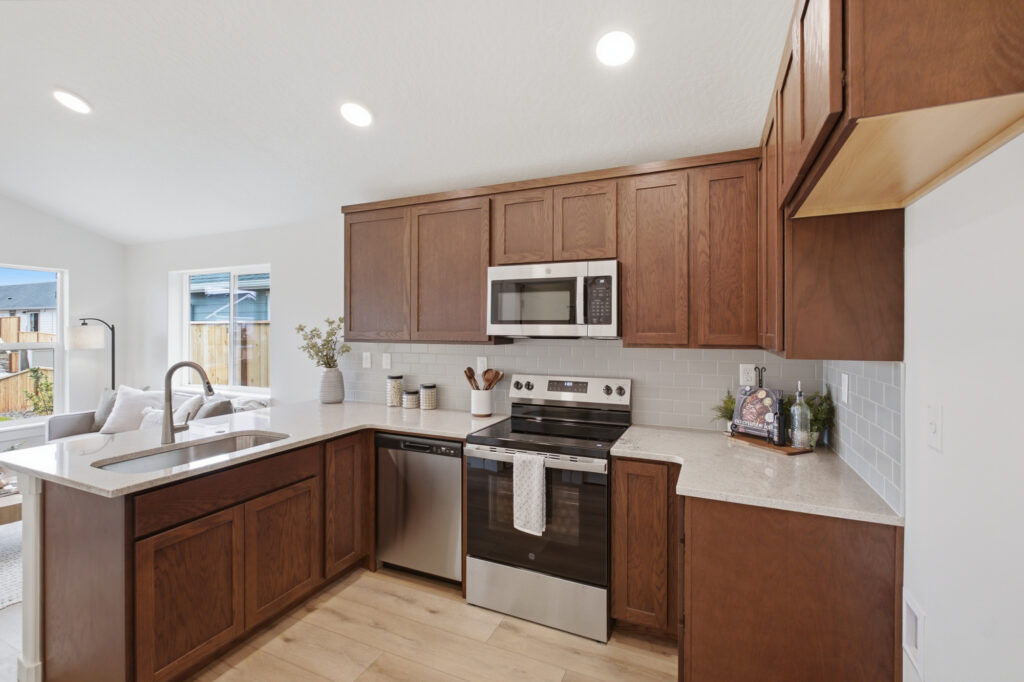
With an ADU, you get real design freedom. You can match layouts, finishes, and features to your main home. Say you want a full-size kitchen, a separate bedroom, and a walk-in shower. An ADU handles all of that. Ready-made ADU plans let you pick a proven design, then adjust details like flooring, cabinetry, and fixtures. You get personalization without starting from a blank page.
A tiny home is efficient, but every square foot has to do double duty. A full kitchen and a separate bedroom often will not fit in 300 square feet. You trade comfort for compactness.
Which Adds More Long-Term Value?
For many homeowners comparing resale value is one of the most important considerations.
An ADU is a lasting investment. It increases your property value, adds usable square footage, and can generate rental income if you choose to rent it out. When you sell, buyers see it as a genuine asset.
A tiny home on wheels behaves more like a vehicle. It tends to lose value over time, much like a car or an RV, and it usually does not raise your property’s appraised value.
Here is how this affects you: an ADU can pay you back for years through rental income, added resale value, and flexible space for family members.
ADU vs Tiny House: Side-by-Side Comparison
| ADU | Tiny House (on wheels) | |
| Permanence | Permanent foundation, utility-connected | Mobile, towable |
| Zoning | Legal living space under standard codes | Often classified as an RV |
| Financing | Home equity, construction loan, cash-out refi | Personal or RV loans, higher rates |
| Customization | Full-size kitchen, separate bedroom | Every square foot does double duty |
| Long-term value | Adds appraised value and rental income | Depreciates like a vehicle |
Why Work with Simplicity to Build Your ADU?
If you’ve decided an ADU is the better choice after comparing an ADU vs tiny house, working with an experienced builder like Simplicity makes the whole process faster, safer, and far less stressful.
Simplicity’s WiseSize ADU is designed with exactly this in mind. Here is what sets our plans apart:
- Ready-made plans that already meet local codes, so you save time and money upfront.
- Permit guidance to help you navigate zoning requirements and approvals with confidence.
- Thoughtfully designed layouts that balance beauty, functionality, and budget.
- Proven construction quality from a team that has built ADUs many times before.
Starting with Simplicity’s established WiseSize plans removes the biggest unknowns from the equation. You know what the finished space will look like, what it will cost, and how long it will take to complete.
Final Thoughts
When comparing an ADU vs tiny house, the right choice depends on your goals. If you’re looking for a permanent investment that adds value to your property, an ADU offers advantages in financing, flexibility, and long-term return. A tiny home can be a fun, flexible choice for a minimalist lifestyle. An ADU, on the other hand, gives you a permanent, code-compliant home that boosts your property value and opens up real financing options.
If you have been exploring ADUs, you might also want to check out our previous post on ADUs vs. guest houses for more context on how these structures compare.
Ready to explore whether an ADU is the right choice after comparing an ADU vs tiny house? Contact Simplicity today to explore your ADU options and start building a space that fits your life and adds lasting value to your home.