
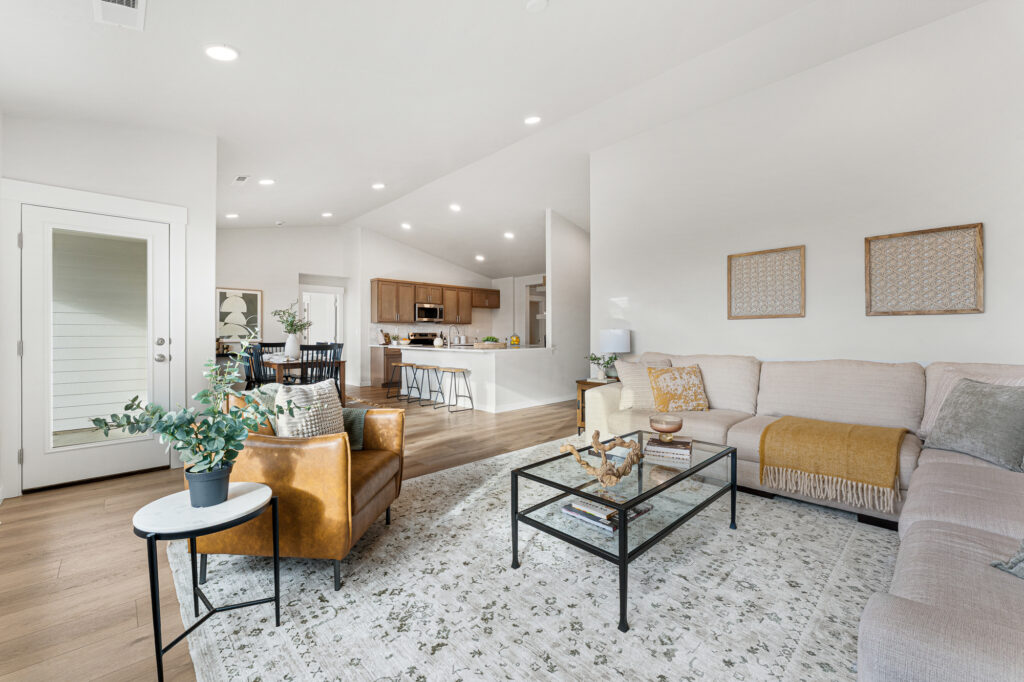
Open-concept living is a beautiful idea, giving you bright, airy spaces where the kitchen, dining room, and living room all flow together. But when you start moving furniture in, that beautiful idea can quickly become confusing. Without walls to guide you, how do you make a kitchen, dining room, and living room work together in one big room? Learning how to decorate an open concept home can feel like a unique challenge, but the good news is that you do not need a degree in interior design to make it work. With a few straightforward strategies, you can turn a cavernous space into a warm, cohesive home.
The key to successfully decorating an open concept home is balancing separation and flow. Here are some practical strategies to help you define your zones, master your color palette, and arrange furniture with confidence.
Define Your Zones with Purpose
The most critical step in decorating an open-concept home is establishing “zones.” A zone is simply a dedicated area for a specific activity, like eating, watching TV, or working. When you create visual boundaries for these mini-rooms, the whole house starts to make sense.
Anchor with Area Rugs
Area rugs are your best friends in an open layout. Think of a rug as an island; everything that sits on that rug belongs to that “room.” They act as visual boundaries that tell the eye a specific group of furniture belongs together.
For your living area, choose a rug large enough for at least the front legs of your sofa and chairs to sit on it. This grounds the furniture and prevents it from looking like a scattered collection of items. For the dining area, choose a rug that extends at least 24 inches beyond the table on all sides. This ensures that when you pull a chair out, the legs stay on the rug.
Let Lighting Lead the Way
Lighting is another powerful tool for zoning. By varying your light sources, you create different atmospheres for different activities.
- Hang a statement pendant light or chandelier directly over the dining table. This creates a focal point that anchors the furniture below it.
- Keep bright, functional task lighting in the kitchen where you need it most.
- Use floor lamps or table lamps in the living area to create a softer, more intimate mood.
Create Flow with a Cohesive Color Palette
One of the biggest challenges when you decorate an open concept home is choosing colors that flow together. Since you can see every part of the main floor at once, the colors need to get along. This does not mean everything has to be the same color. It simply means the colors should flow together naturally.
Use the 60-30-10 Rule
A great way to ensure balance is to use the 60-30-10 rule for your entire open space.
- 60% Main Color: This is your dominant color, usually for walls and large furniture. A neutral shade like soft white or gray helps unify the space.
- 30% Secondary Color: This provides contrast and can be used for curtains, accent chairs, or an area rug.
- 10% Accent Color: This is your pop of fun. Use a bold color for throw pillows, artwork, or vases.
The secret is to sprinkle these colors throughout the entire space. If your accent color is navy blue, put a blue pillow on the couch, navy hand towels in the kitchen, and a piece of art with blue tones in the dining area. This repetition guides the eye through the room and makes the separate zones feel connected.
Arrange Furniture Strategically
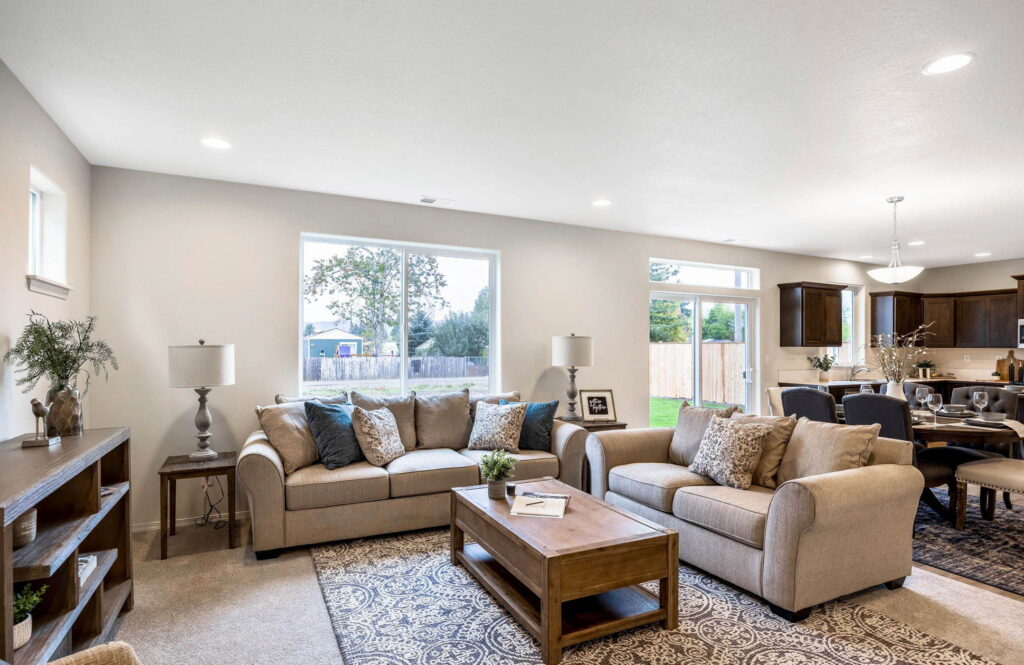
Smart furniture placement is essential when decorating an open concept home. Pushing all your furniture against the walls is a common instinct, but it often kills the vibe of an open-concept room. It leaves a weird, empty “dance floor” in the middle of the house. Instead, pull furniture into the center to create intimate groupings.
Float Your Sofa
“Floating” your sofa means placing it away from the wall. Use the back of the sofa as a divider. When you position the back of your couch toward the dining area or kitchen, you create a natural barrier. It effectively says “the living room starts here.”
If the back of your sofa looks plain, place a console table behind it. This adds a finished look and gives you a surface for lamps, books, or decor. It acts as a bridge between the living zone and whatever lies behind it.
Create Clear Traffic Flow
Think about how you walk through the room. You want clear paths from the front door to the kitchen and from the kitchen to the dining table. Avoid blocking these natural walkways with bulky chairs or ottomans. Leave at least 30 to 36 inches of walking space between furniture groupings so no one has to squeeze through.
Use Visual Tricks to Add Height
Open floor plans often come with high ceilings, which can make a room feel cold if all your decor is at eye level. You want to draw the eye upward to balance the wide, horizontal space.
- Curtains: Hang your curtains as high as possible, ideally just under the ceiling or crown molding. This trick emphasizes the room’s height.
- Art: Use large-scale artwork. A tiny picture frame looks lost on a big wall. Go big with a canvas or create a gallery wall to fill the space.
- Shelving: Tall bookcases or open shelving units add vertical interest while providing much-needed storage.
Don’t Forget Acoustics
One downside of open-concept living that people rarely talk about is noise. Without walls to block sound, the clatter of pots and pans can drown out the TV. To combat this, you need soft materials to absorb sound.
- Textiles: Use plenty of throw pillows and blankets.
- Rugs: As mentioned earlier, rugs are essential visually, but they also stop sound from bouncing off hard floors.
- Upholstered Furniture: Choose fabric sofas over leather if noise is a concern.
Adding these soft touches makes the home feel cozier both physically and acoustically.
Bringing it All Together
Decorating an open-concept home is a balancing act. You want distinct zones for cooking, eating, and living, but you also want a sense of unity. With the right strategy, you can confidently decorate an open concept home that feels cohesive, warm, and functional.
Don’t let the wide-open space intimidate you. Start with one zone, define it well, and watch your home transform into a collection of cozy, connected moments.
Ready to build your dream home? Simplicity makes it easy to build on your own land. Start your journey today by contacting our New Home Advisors or browsing our home plans, and let us help turn your vision into a reality.